Floyd Starr ran a home for troubled boys in Michigan. He wanted to thank Kahlil Gibran for The Prophet, and was told the poet was the most unreachable man in New York. Then, one afternoon on a street-car, he heard a voice.
By Francesco Medici
• ❧ KGC ❧ •
KAHLIL GIBRAN COLLECTIVE
By Francesco Medici · Kahlil Gibran Collective · 2019 · kahlilgibran.com
• ❧ KGC ❧ •
I
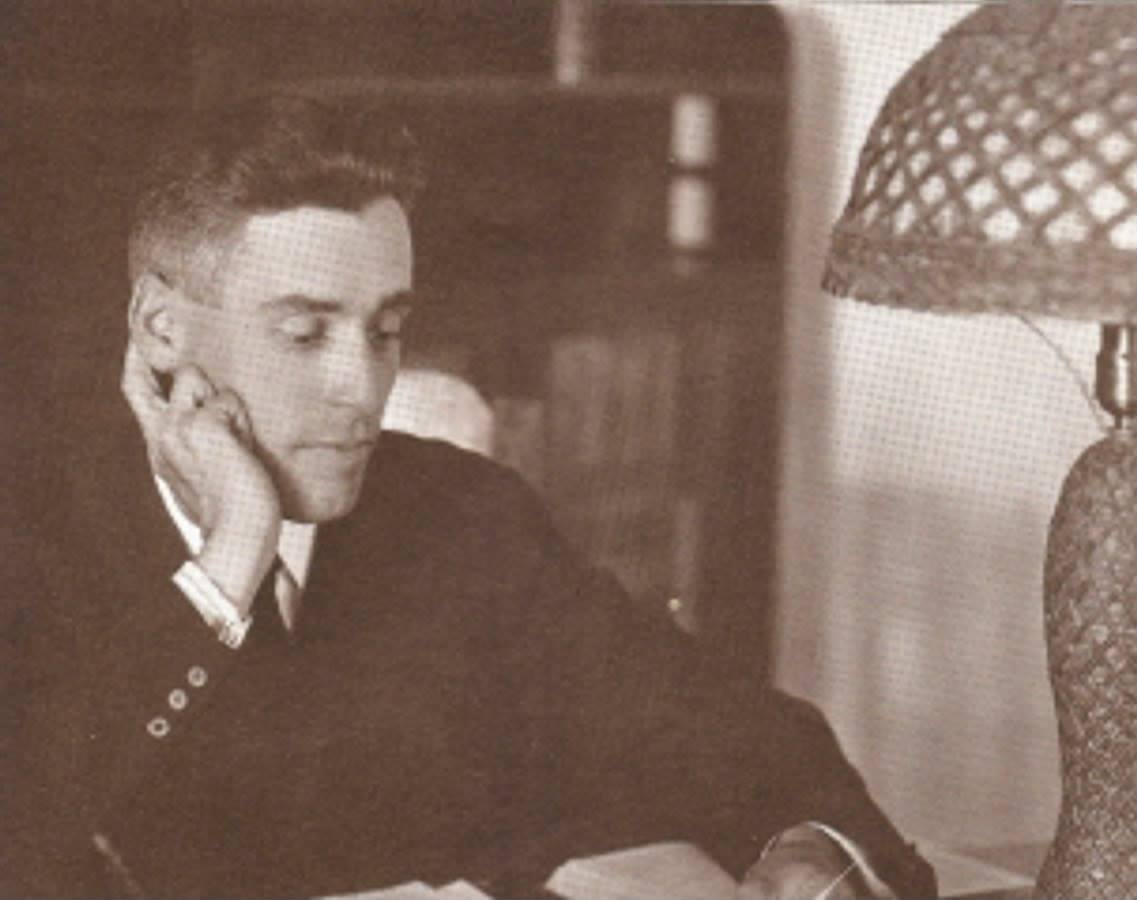
Floyd Elliot Starr (1883–1980) was the founder and president of the Starr Commonwealth for Boys in Albion, Michigan, which he guided for more than fifty years. After attending Albion College and receiving his Bachelor of Arts degree in 1910, he was employed at Bernarr McFadden's Healthatorium in Chicago and then at the Beulah Home for Boys. In 1913 he was able to purchase forty acres of land on Montcalm Lake and established his own non-profit home and residential school for delinquent, homeless, and neglected boys, which later became the Starr Commonwealth for Boys.
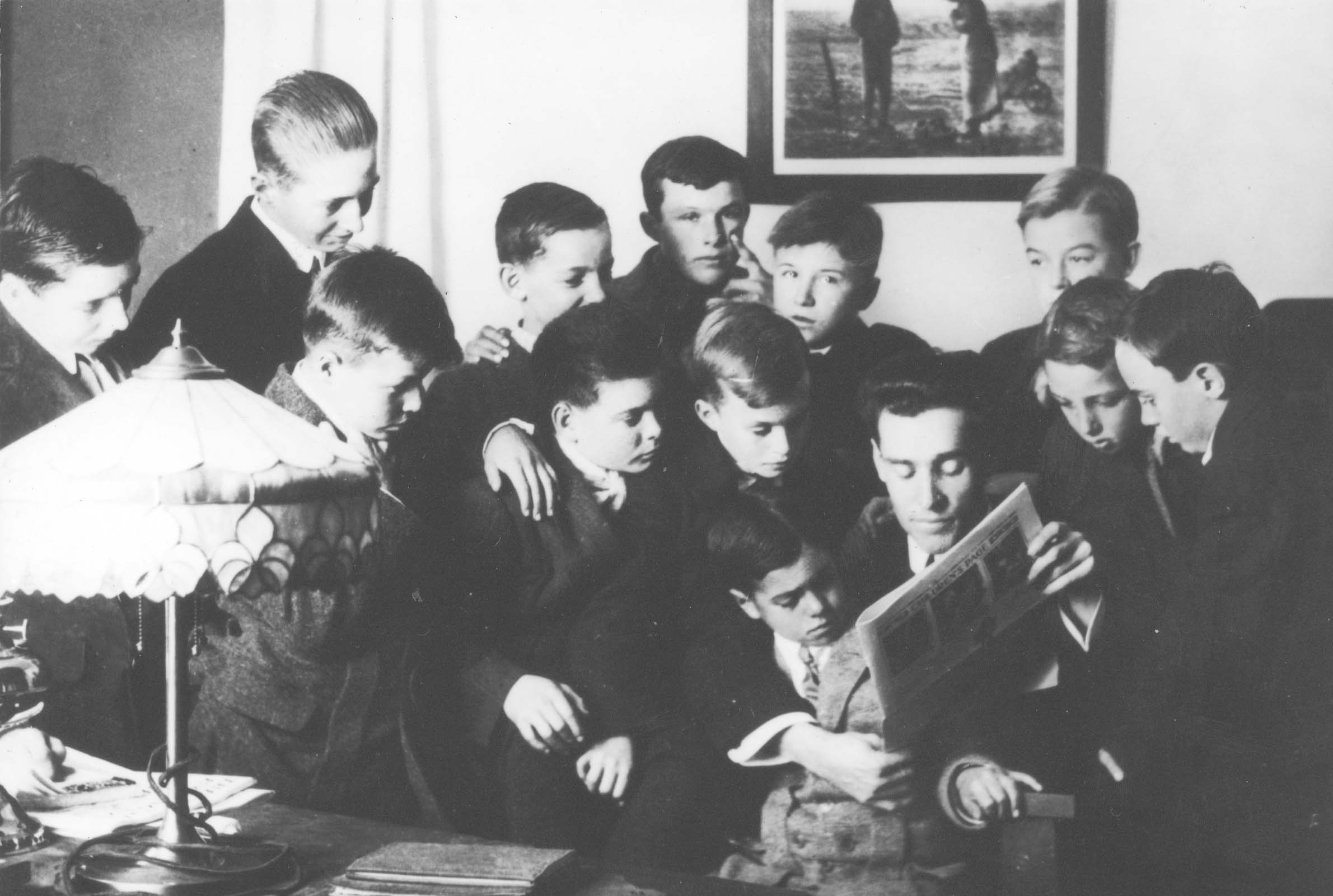
Starr was a friend of Upton Close (born Josef Washington Hall, 1894–1960), the explorer, journalist, author, Asia scholar and radio commentator, who lived with his wife Alice only a few blocks from Gibran in New York City. On one of Starr's birthdays, Close gave him a copy of The Prophet. Starr, deeply impressed, soon began to include verses from it in his speeches, church services, and correspondence. He came to feel so intimate with the book that he resolved to meet the poet and tell him how much it meant to him.
• ❧ KGC ❧ •
II
Some time later Starr was in New York, and Close asked, "Is there anyone in the city whom you would like to meet?" He replied: "I had no desire to meet your Mayor Walker or others of his kind, but I should like very much to meet the man who wrote The Prophet." Close threw up his hands: "Of all the people in New York, you would pick the one that is inaccessible." He tried valiantly to get Starr an appointment, without success.
On a Sunday afternoon in 1928, when Starr was out for a stroll with the Closes through West Tenth Street, Upton pointed to an apartment house and said, ironically, "Floyd, that's where your friend Kahlil Gibran lives." Starr replied at once: "I want to meet him." But Upton shook his head again. "I'm terribly sorry, my friend. I can't help you and I don't know anyone who can. Gibran is said to be the most unavailable man in New York City."
Starr said no more, but he did not forget the address. A few days later, something curious happened. As Starr told it:
While I was on a street-car on my way to visit a Mrs. Burt, a voice as clear as my own voice said: "If you want to see Kahlil Gibran, go to him at once!" So I got out of the car, walked to his apartment nearby, and looked at the register. There was his name, and there was his apartment on the third floor.
Up two short flights of stairs, then up two more flights, and there before me was a door with a brass knocker engraved with the name "Kahlil Gibran." After I rapped softly, the door opened and there stood a man exactly my age, my size and my build.
I wasted no words. "I have come to see Kahlil Gibran," I said. "I am he," acknowledged the poet, "but could you come some other time, please? I have a guest now." "No," I said, "I think it will not be necessary. I have merely come to thank you for writing The Prophet." Gibran looked at me keenly and held open the door: "I think you should come in. Perhaps this friend of mine and you will be kindred spirits."
After a bit of conversation, this great poet turned to me and asked: "What do you do?" "Well," I replied, "I work with so-called bad boys." "Oh, bad boys!" exclaimed he. "I love bad boys. The worse they are, the more I love them! How I envy you!"
• ❧ KGC ❧ •
III
These words were hardly what Starr expected, and they led to a spirited discussion in which the two found much in common. When at last Starr rose to go, he urged Gibran to come to the Commonwealth, stay as long as he wanted, and learn "to love his boys." The visit was not to be: three years later, the poet died.
Only a few months before his death, Gibran sent Starr several manuscript pages from The Prophet. Until Starr moved into Candler Hall years later, he kept them in a little Korean chest in Gladsome Cottage. Today they are in the Brueckner Museum at Starr Commonwealth, 13725 26 Mile Road, Albion, Michigan.1 The museum also holds many of Gibran's published works — including a book of poetry that was a gift from Barbara Young — an original watercolour, and a pen supposedly owned by him.2
❁
1 Cf. Keith J. Fennimore, Faith Made Visible: The History of Floyd Starr and His School (Albion, Michigan: Starr Commonwealth, 1988), pp. 117–118; F. E. Starr, Kahlil Gibran Was a Man I Called My Friend, transcribed from an unpublished talk. ↩
2 Information given to the author by Amy Reimann, Major Gift Officer and Director of Historic Properties, Starr Commonwealth. ↩
This article is based on an excerpt from the paper "Tracing Gibran's Footsteps: Unpublished and Rare Material," in Gibran in the 21st Century: Lebanon's Message to the World, edited by H. Zoghaib and M. Rihani (Beirut: Center for Lebanese Heritage, LAU, 2018), pp. 93–145.
All Rights Reserved © Copyright Francesco Medici and kahlilgibran.com 2019