The Prophet
The Prophet
About The Book

About The Book

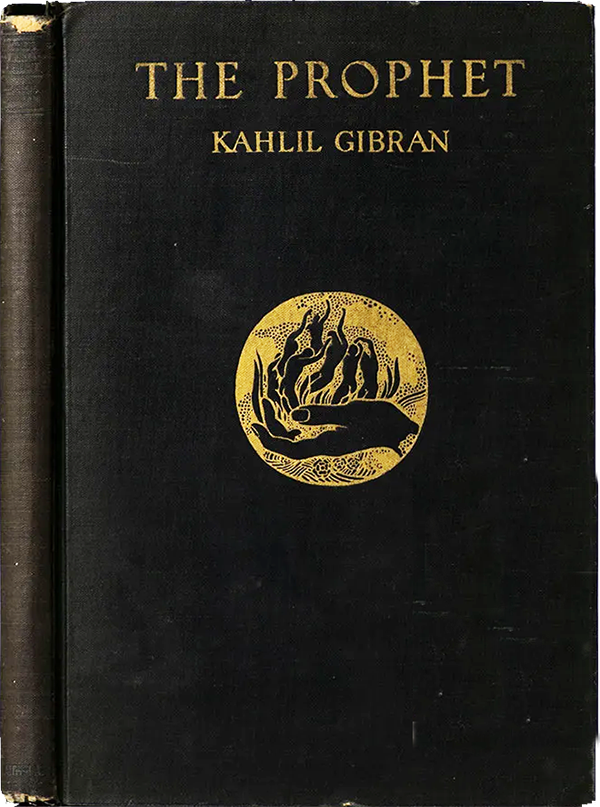
First published in 1923, The Prophet by Kahlil Gibran blends philosophy and mysticism, inspiring millions worldwide with its timeless messages.

Read More
The Prophet 100

The Prophet 100

First published in 1923, The Prophet remains a global classic, sharing Gibran’s timeless wisdom on love, life, and the human spirit across generations.

Read More

Art Works

Rose Sleeve, 1911. Oil on Canvas, 25 3/8 x 18 inches (21.5 x 25.3 cm). Telfair Museum
The Triad-Being Descending Towards the Mother Sea, 1923.

Books by Kahlil Gibran

Written Works

Kahlil Gibran (Xalil Jubron), "Donishmand hikmatlari" (The Prophet), translated into Uzbek by Mahkam Andijoniy, Tashkent: Oʻzbekiston faylasuflari milliy jamiyati nashriyoti, 2006.
Marisa Avogadro Thomé, "Khalil Gibran y El Profeta: Historia de un hallazgo editorial en la Biblioteca Popular Pedro Arce", Argentina, Mendoza, Maipú: Mar y Arte Ediciones, 2026.

Temple of Arts

Johan Bojer (6 March 1872 – 3 July 1959)
Rose Cecil O'Neil  (c.1918)

Kahlil Gibran Collective

the artist. the poet. the man.

The Kahlil Gibran Collective
Latest News
 by Francesco Medici all rights reserved Francesco Medici Copyright 2024 ©  The Ottoman Empire entered World War I as one of the Central Powers (together with the German and the Austro-Hungarian Empires) with a surprise attack on Russia’s Black Sea coast on October 29, 1914, which prompted Tsar Nicholas II (1868-1918) and
by Francesco Medici and Glen Kalem-Habib all rights reserved © copyright 2024 Francesco Medici and Glen Kalem-Habib  Kahlil Gibran’s departure from this world on April 10, 1931, marked the end of an era, leaving behind a profound void in the hearts of those who cherished his wisdom. Mikhail Naimy, a trusted confidant
By Francesco Medici  On August 12, 1918, Edgar B. Speer, a BOI (Bureau of Investigation)[1] special agent in the Pittsburgh office, sent to the New York office a telegram reproducing a notice from a certain Tremble, probably one of their informants or agents, who recommended his colleagues verify the following information
Reposted from The Liberum  All rights reserved. © 2023  A remarkable discovery over the reading and the influence of Lebanese poet, writer, and artist Kahlil Gibran by the style of the German philosopher Friedrich Nietzsche. Reading Nietzsche's posthumous essay “On Truth and Lies in a Nonmoral Sense” (1969) in “Le livre du philosophe”

Help Preserve Gibran's Legacy

For over ten years, our small team has lovingly built the world's most comprehensive website —thousands of pages of rare works and discoveries, freely shared.

Now we need your help to sustain it. A modest subscription gives full access while preserving this treasure for future generations.

Subscribe Today - and help us keep Gibran's wisdom alive.

Free

Duration:

Once Off

Price: Free

Previews:

Unlimited

Downloads:

2

Sign Up

Gold

Duration:

One Year

Price: $5.00

Previews:

Unlimited

Downloads:

Unlimited

Sign Up

Platinum

Duration:

Lifetime

Price: $20.00

Previews:

Unlimited

Downloads:

Unlimited

Sign Up